
The benefit of using Synthetic Intelligence (AI) is that folks foster the underlying programming, and the artificial intelligence itself fosters the mannequin and additional develops it after a while. This algo buying and selling technique is generally utilized by market makers, who are typically giant institutions or corporations. The cause behind them being massive is that an immense amount of securities are involved in the identical. Whereas high frequency buying and selling enhances market effectivity, it carries risks that can impression stability. These include regulatory issues, operational failures, and mannequin inaccuracies, all of which can lead to significant financial challenges. The rapid execution of trades can even amplify volatility, making markets extra unpredictable for buyers and growing the chance of sudden value fluctuations.
Be that as it may, presently, retail investors are displaying curiosity in algorithmic trading since some revolutionary organizations & brokers like TD Ameritrade are supporting retail investors/HNIs. It works as a outcome of merchants and buyers exhibit numerous emotional decisions when deviation from the imply is excessive. As a result, some clever buyers make gains as a end result of behavioural biases and the emotional mistakes of others. Medium-Frequency Trading systems incorporate all exchanging workout routines that don’t want market microstructure examination on one aspect and altogether depend upon https://rongqin-ai.com/index.php/2023/08/01/better-client-managing-why-your-forex-enterprise/ market sway on the alternative side.
Pros And Cons Of High-frequency Buying And Selling
- Earlier, the consumers and sellers of the shares needed to strike a deal on the change.
- They analyse live market feeds, pinpoint helpful buying and selling indicators and even identify the optimum entry or exit points for a trade.
- However, it is a growing definition, with the measure of time thought-about “low”, always contracting.
- Without an successfully configured computer program, it’s unimaginable to hold out trades on the pace and frequency that define HFT.
High-Frequency Buying And Selling (HFT) refers to a specialised type of algorithmic buying and selling where transactions are executed at extraordinarily high speeds. It entails a considerable volume of trades completed in fractions of a second and is typically employed for short-term investment methods. HFT depends on refined computer methods to process trades at lightning-fast speeds, typically quicker than a human may react. This method is predominantly used by institutional traders similar to investment banks and hedge funds, given its complexity and the resources required for its execution. High Frequency Buying And Selling (HFT) is a sort of buying and selling technique the place giant volumes of securities are purchased and sold within fractions of a second using powerful computers and algorithms.
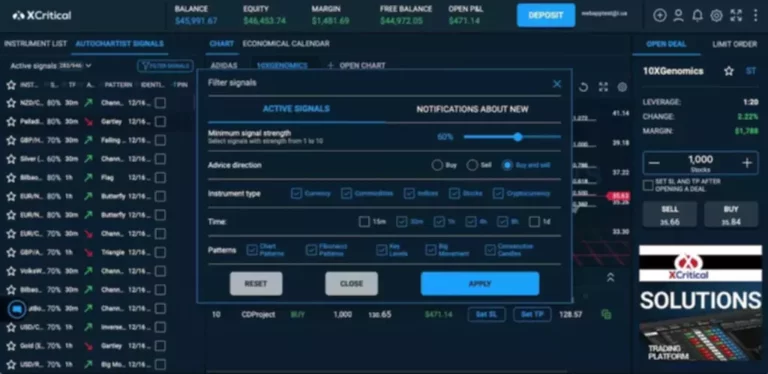
Although the adjustments that trigger such trades could additionally be minute and seemingly insignificant, the sheer quantity of transactions in excessive frequency buying and selling amplifies the general profit. To make high frequency trading possible, substantial funding in technological infrastructure is a prerequisite. Although the adjustments that trigger such trades could additionally be minute and seemingly insignificant, the sheer quantity of transactions in HFT amplifies the overall profit. To make high-frequency trading potential, substantial investment in technological infrastructure is a prerequisite.
Futures
Principally, algorithmic buying and selling forms a subset of high-speed buying and selling or high-frequency trading. It entails algorithms or instructions that are pre-programmed and work to conduct trades in an automatic method. The algorithms that are embedded into such techniques are designed to work in accordance with Cryptocurrency exchange predetermined guidelines and prefixed standards to make decisions in trading. High-frequency trading methods typically contain holding positions for very quick durations.
Algorithms are actually being programmed to interpret news and act neatly much before people can react. Thus let’s say if the RBI governor doesn’t cut interest rate, an algorithm which is scanning numerous information feeds will learn, interpret and act in milliseconds even before a human can finish studying the headlines. The function behind creating these 2 series is to disrupt the myths about ‘trading’ and educate about ‘how to trade’ respectively. The concerned RM is expected to take the initiative in this regard and prevent losses incurring the company. Bajaj Financial Securities Limited is a distributor for Non-Broking Products/Services similar to Mutual Funds, Mutual Funds SIP, IPO, Bonds, Insurance, PMS, International Investing, any other third-party products/services.
Market Snapshot By Bajaj Broking
This is crucial because executing trades in massive volumes can influence inventory prices severely. By splitting giant hft full form HFT orders into smaller segments, algorithms help avoid this issue. HFT refers to the usage of superior expertise and algorithms to execute massive numbers of trades at very high speeds. It emerged in the late Nineties and early 2000s as technological advances made it possible for merchants to make use of computer systems to research and execute trades at excessive speeds.
“Investments in securities market are topic to market threat, learn all of the scheme associated documents carefully before investing.” Thirdly, there are widespread ethical dilemmas surrounding high frequency trading. The argument that top frequency trading ends in ghost liquidity or extraordinarily short-lived liquidity that can solely be tapped by trading platforms and never by different traders makes the methodology a moral gray space.
Not Like HFT, which relies closely on superior pc algorithms and ultra-fast execution speeds, MFT can rely extra on human evaluation and judgment. MFT traders could use a variety of indicators and instruments to assist establish potential buying and selling alternatives, corresponding to value charts, technical indicators, earnings stories, and information headlines. Low-frequency buying and selling (LFT) is a type of https://www.xcritical.in/ trading that contrasts with high-frequency trading (HFT). While HFT is characterized by excessive volumes of trades executed at extremely quick speeds, LFT is characterized by a extra measured approach. LFT usually involves making fewer trades over an extended interval, with a concentrate on basic analysis, long-term funding methods, and danger administration.